
Speech & Language Therapy
“Helping every child find their voice.”
What is Speech & Language Therapy?
Speech and Language Therapy addresses challenges with communication — from speech sounds and fluency to understanding language and using it socially. At Devine CDC, our speech-language pathologists work with children to build their communication abilities through engaging, evidence-based techniques that make learning to talk (or communicate in any way) a joyful experience.
Communication is the foundation of everything — relationships, learning, self-expression, and emotional well-being. When a child struggles to communicate, it can lead to frustration, behavioural challenges, and social isolation. Early speech therapy can prevent these cascading effects and give your child the tools to connect with the world around them.
How Speech & Language Therapy Benefits Your Child
Speech Sound Clarity
Helps children pronounce sounds correctly so they can be understood by family, teachers, and peers.
Language Comprehension
Builds the ability to understand instructions, questions, and conversations — the foundation of all learning.
Expressive Language
Supports children in using words, phrases, and sentences to share their thoughts, needs, and stories.
Social Communication
Teaches pragmatic skills like maintaining conversations, understanding body language, and reading social cues.
Fluency Support
Provides strategies for children who stutter, helping them speak more smoothly and with greater confidence.
Feeding & Oral Motor Skills
Addresses oral muscle weakness that affects both speech clarity and safe, efficient eating and drinking.
Our Approach to Speech & Language Therapy
Speech-Language Evaluation
A comprehensive assessment of your child's receptive language, expressive language, speech sounds, fluency, and pragmatic skills using standardised tools.
Targeted Intervention Plan
We create a focused therapy plan addressing your child's specific communication goals — whether it's first words, clear pronunciation, or conversation skills.
Interactive Therapy Sessions
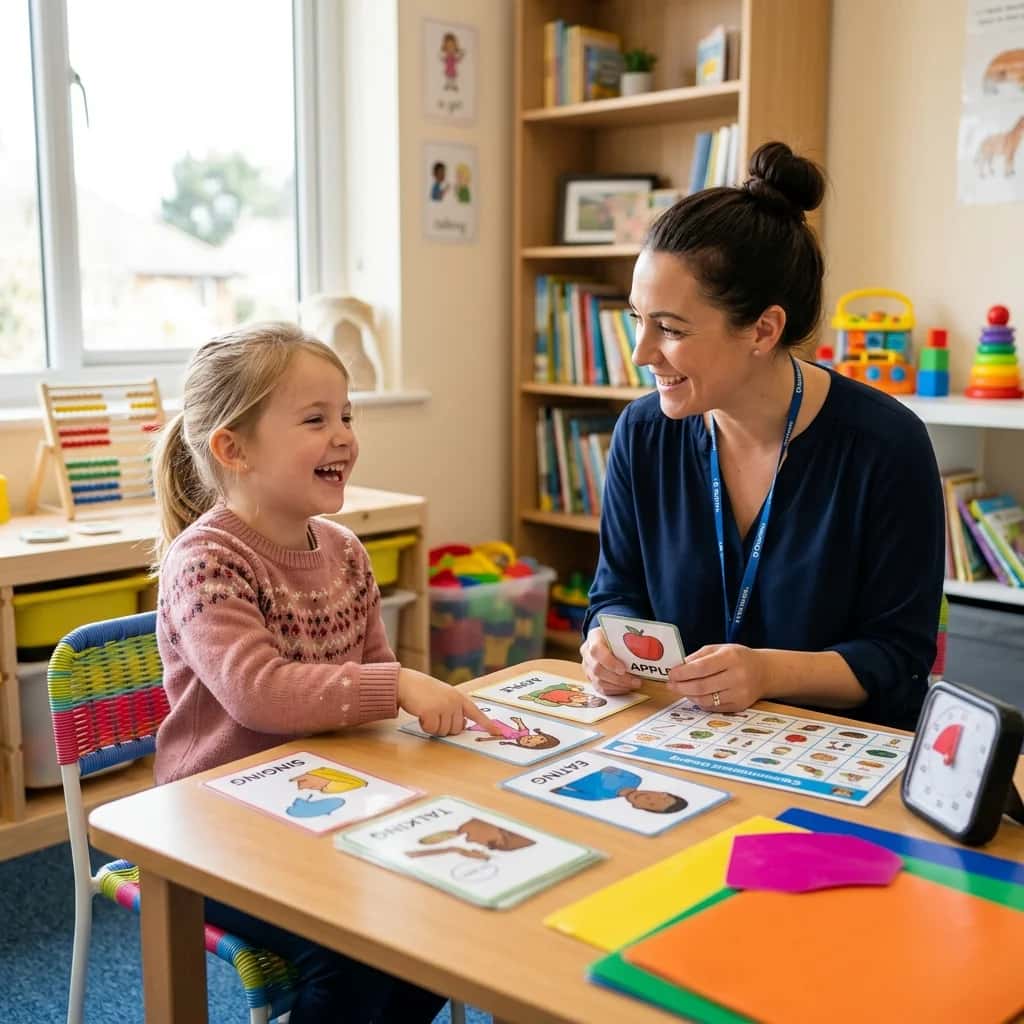
Sessions are filled with songs, stories, games, and activities that naturally encourage language use. We follow your child's interests to maximise engagement.
Augmentative Communication
For children who need additional support, we introduce picture boards, communication apps, or sign language to ensure every child has a way to express themselves.
Carryover Strategies
We equip parents with conversation techniques, book-reading strategies, and daily routines that reinforce speech goals outside of therapy.
Signs to Watch For
If your child shows any of these signs, consider scheduling an assessment. Early identification leads to early support.
- Not babbling by 12 months
- No single words by 18 months
- Not combining two words by age 2
- Speech is difficult to understand by age 3
- Difficulty following simple instructions
- Frustration when trying to communicate
- Loss of previously acquired speech or language skills
- Limited vocabulary compared to same-age peers
Frequently Asked Questions
When should I be concerned about my child's speech?
If your child isn't babbling by 12 months, not using single words by 18 months, or not combining words by age 2, it's worth getting an assessment. Trust your instinct — if something feels off, early evaluation is always beneficial.
Can bilingual homes cause speech delay?
No. Research consistently shows that growing up in a bilingual environment does not cause speech delay. Children can learn multiple languages simultaneously. However, if you notice delays, therapy can be conducted in the child's dominant language.
How can I support my child's speech at home?
Talk to your child throughout the day, read together daily, narrate your activities, expand on what they say, and give them time to respond. Reduce screen time and increase face-to-face interaction.
Will my child need speech therapy forever?
Most children graduate from speech therapy once they reach their communication goals. The duration depends on the severity of the delay and the child's response to therapy — it could range from a few months to a couple of years.
A Note for Parents
“Every word your child learns is a bridge to the world. We celebrate every babble, every new sound, every sentence — because we know how much courage it takes. At Devine CDC, your child's voice matters, however it sounds.”
— The Devine CDC Team
Ready to start?
Early intervention is key. Schedule an assessment with our expert clinicians to discover how Speech & Language Therapycan support your child's growth.